What Not Saying Anything Actually Says About You
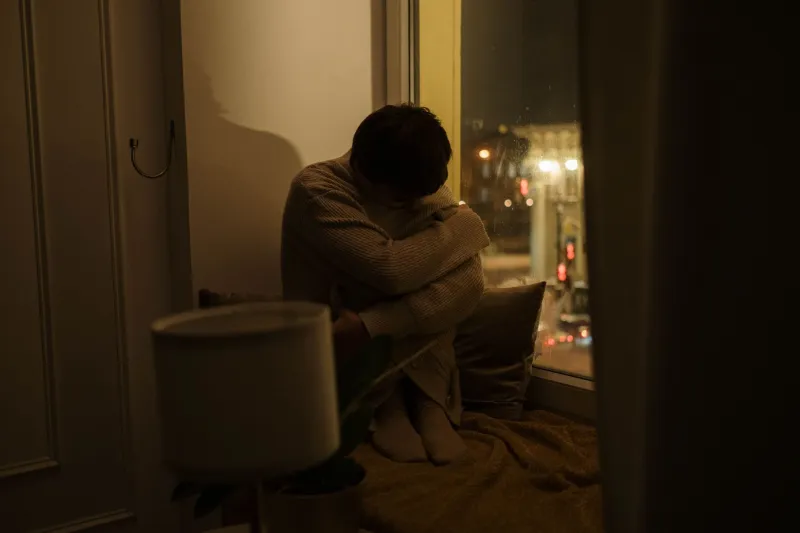
There's a version of me that used to respond to everything. Every comment that felt slightly off, every subtweet that was probably — definitely — about me, every DM that opened with something passive-aggressive dressed up as a question. I thought engaging meant I was confident. Turns out, I had it completely backwards.
Silence, real deliberate silence, is one of the most misread moves you can make in public life. People assume it means you're guilty, or scared, or out of things to say. But what I've come to understand is that silence is actually a statement — one that doesn't need a caption or a follow-up thread to land.
The Reflex to Explain Is Trained, Not Natural
We grow up in a culture that treats justification like a virtue. Explain yourself. Defend your choices. Make your reasoning visible so people can decide whether or not to approve of it. And honestly, that conditioning runs deep — especially for anyone who's built something in public.
The internet has a way of making everything feel like a courtroom. Someone questions your decision, and suddenly your fingers are moving before your brain even catches up. You're three paragraphs into a response that nobody asked for, explaining context that doesn't actually change anything, to an audience that already made up their mind before they hit send.
I started noticing how much energy I was burning just managing other people's perceptions. Not creating, not building, not doing the work that actually matters — just maintaining. Reacting. Plugging holes in a narrative I didn't write and couldn't fully control anyway.
The reflex to respond isn't strength. It's just a habit. And habits can be unlearned.
When Silence Becomes a Filter
Here's what changed for me: I started treating my silence the same way I treat what I choose to share. Both are editorial decisions. Both say something about what I value and what I'm actually focused on.
When drama surfaces — and it always does — the first question I ask myself now isn't what do I say? It's does this deserve space in my life? That reframe alone shifted everything. Because most of the time, the honest answer is no. Not because I'm above it, but because engaging would cost me something I can't get back: momentum, clarity, time.
Silence also works as a filter in a really useful way. The things that genuinely deserve a response tend to make themselves obvious. They're the conversations that push something forward, the feedback that's actually trying to help, the questions that open a door rather than close one. Everything else? It tends to dissolve on its own when you stop feeding it.
What I've noticed is that the people who really matter — collaborators, the audience I'm actually building for, the relationships that go deeper than a comment section — they don't need me to defend myself constantly. They're already here. They get it.
The Criticism That Lives Rent-Free (Until You Evict It)
I want to be honest about something: not responding doesn't mean not feeling. That's the part nobody talks about when they glamorize the whole "unbothered" aesthetic.
Some criticism sticks. Some of it is designed to. There's a specific kind of comment that finds the exact soft spot you've been quietly protecting, and it lands differently than the noise. I'm not going to pretend I've mastered some zen detachment where nothing touches me. That would be a performance, and this space isn't for performances.
But there's a difference between feeling something and acting on it publicly. I can sit with a critique, actually examine whether there's anything real in it, and then decide — privately — what it means for how I move forward. That process doesn't require an audience. It doesn't need to happen in a comment thread at 11pm when I'm already tired and running on defensive energy.
The eviction notice I serve on criticism that doesn't serve me isn't about pretending it never showed up. It's about deciding it doesn't get a lease.
Silence as a Creative Boundary
There's a practical side to this that I think gets overlooked when people talk about "protecting your peace" — which, as a phrase, has been run so far into the ground that it barely means anything anymore.
Constant engagement is a creative drain. Every response you write, every thread you get pulled into, every explanation you offer up — that's cognitive and emotional bandwidth that isn't going toward the work. And the work is the whole point. At least, it is for me.
When I started treating my attention like a resource with actual limits, silence stopped feeling like avoidance and started feeling like protection. Not of my ego or my reputation, but of the creative space I need to actually make things worth sharing.
Some of the best stuff I've put out here came from periods where I went quiet externally. Pulled back from the noise, stopped monitoring reactions, just focused on what I was trying to build and why. The silence wasn't absence — it was presence, redirected.
What Restraint Actually Signals
Here's the thing about operating in an attention economy: everyone is competing for reaction. The whole system is engineered to reward the loudest, the most reactive, the most willing to perform conflict for clicks. Opting out of that loop isn't passivity — it's a refusal to play a game that doesn't pay out the way it promises.
When you stop explaining every decision, stop chasing down every piece of criticism, stop feeling obligated to fill every silence with noise — something shifts in how you carry yourself. And people notice, even if they can't always name what they're noticing. There's a kind of groundedness that comes through when you're not constantly managing the narrative. It signals that you trust the work to speak for itself.
I'm not always perfect at this. There are still moments where I catch myself drafting a response I know I'm not going to send, working through something in a note app before deciding it doesn't need to go anywhere beyond that. That's fine. The draft isn't the problem. Hitting publish on every draft is.
The Long Game
Silence is a long-game move. It doesn't get you the immediate satisfaction of having the last word. It doesn't give you the dopamine hit of a clap-back that lands. What it gives you instead is compounding — more creative energy, more clarity about what actually matters, more of the specific kind of credibility that only comes from not needing to prove yourself at every turn.
I've learned more about what I value by noticing what I don't respond to than by tracking what I do. The pattern of my silence is, in a lot of ways, a more honest self-portrait than anything I've intentionally published.
So yeah. Sometimes the most powerful thing you can do is just not say a word. Let the work exist without a defense attorney. Let the noise run out of oxygen on its own.
Your silence isn't empty. It's just yours.