Famous to Everyone, Known by No One: The Quiet Isolation Nobody Talks About
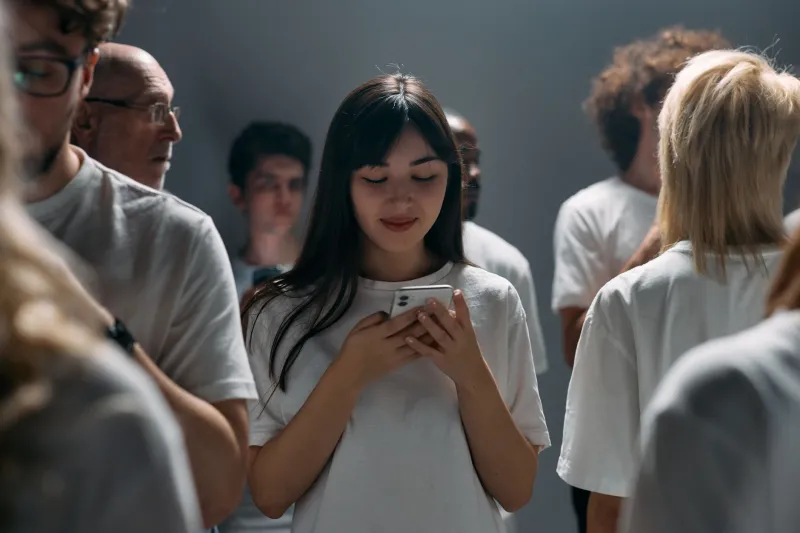
There's a version of loneliness that nobody prepares you for. It doesn't look like sitting by yourself on a Friday night or eating lunch alone at the end of a long table. It looks like opening your phone to 40,000 notifications. It looks like a comment section full of people who feel like they know you — and realizing, somewhere in the middle of scrolling, that not a single one of them actually does.
That's the thing about visibility at scale. It creates this strange illusion of closeness that runs in one direction only.
The Difference Between Being Seen and Being Known
When people talk about building an audience, the language is almost always about reach. How many people are watching. How many are engaging. How many clicked through. And those numbers matter — I'm not going to pretend they don't. But somewhere along the way, reach got confused with relationship, and that's where things start to feel genuinely isolating.
Being seen means someone watched the video, read the caption, followed the account. Being known means someone understands the context behind what you chose to share — and more importantly, what you chose not to. Those are two completely different things, and the gap between them grows wider the larger an audience gets.
The people who follow you most closely often have the most confident ideas about who you are. They've catalogued your content, noticed your patterns, built a mental profile. And that profile might be thoughtful and detailed and even flattering. But it's still a construction. It's built from the edited version, the version that made it past your own internal filter before it ever got posted. The actual, unfiltered, three-in-the-morning version of you? That one stays invisible.
When the Persona Becomes the Person (At Least to Everyone Else)
Here's something that took me a long time to name: there's a real emotional cost to being perceived as a persona rather than a person. When your public-facing self gets polished enough, people stop questioning whether there's more underneath. They stop wondering what you're actually like when the camera's off or the mic's down. The persona becomes the ceiling of how deeply anyone bothers to look.
And it's not malicious. Most of the time, it's not even conscious. People engage with what they're given. That's just how it works. But when you're on the inside of that dynamic — when you're the one who knows exactly how much is missing from the picture — it creates this low-grade, constant kind of ache. You're having conversations with people who are technically talking to you but actually talking at a version of you that you half-recognize.
Socially, in the US especially, there's this cultural shorthand around fame and following that assumes visibility equals fulfillment. Like if enough people are paying attention to you, loneliness shouldn't be possible. That assumption is wrong, and it's one of the quieter lies that public life tells people before they step into it.
The Specific Exhaustion of Being Dissected
There's another layer that doesn't get discussed enough: the experience of having your choices, your words, your face, your energy picked apart — publicly, constantly — while your actual inner world stays completely off-limits to the conversation.
People will debate what you meant by a look you gave in a video. They'll theorize about your relationships based on who showed up in your background. They'll diagnose your emotional state from a caption. And all of that analysis is happening in a space you can see but can't fully participate in, because the moment you try to correct the record or add nuance, it just becomes more content to dissect.
That's exhausting in a way that's hard to explain to someone who hasn't lived it. It's not just that people get things wrong — it's that there's no real mechanism for them to get it right. The format doesn't allow for the kind of slow, patient, back-and-forth that actual understanding requires. So you end up watching a version of yourself be discussed endlessly, knowing the conversation is missing everything that actually matters, and having no clean way to close that gap.
What Real Connection Actually Requires
I've thought about this a lot. What makes the difference between an interaction that leaves you feeling more alone and one that actually lands? It's almost never about the size of the moment. It's about whether the other person is responding to you or to their idea of you.
The interactions that have genuinely mattered — the ones that cut through the noise — have almost always been small. A message from someone who caught something specific, something I didn't even flag as significant, and reflected it back in a way that showed they understood the thing behind the thing. A conversation where someone pushed back thoughtfully instead of just validating. A moment where I felt like the person I was talking to wasn't performing connection any more than I was.
Those moments are rare. And their rarity is exactly what makes them feel like oxygen.
Living Inside the Paradox
I don't think there's a clean resolution to this. Massive visibility and genuine intimacy operate on fundamentally different scales, and trying to force one to produce the other is a setup for disappointment. The audience relationship is real and it matters, but it's not a substitute for being actually known by actual people in actual time.
What I've learned — slowly, and not without some bruises — is that the answer isn't to collapse the distance by oversharing or to protect yourself by going fully opaque. It's to be honest about what the dynamic is and to invest real energy in the smaller, quieter connections that the platform can't manufacture for you.
Being followed by millions is its own kind of thing. It has weight and meaning and I don't take it lightly. But it doesn't fill the specific space that understanding fills. And pretending it does — or letting other people assume it does — is one of the loneliest performances of all.