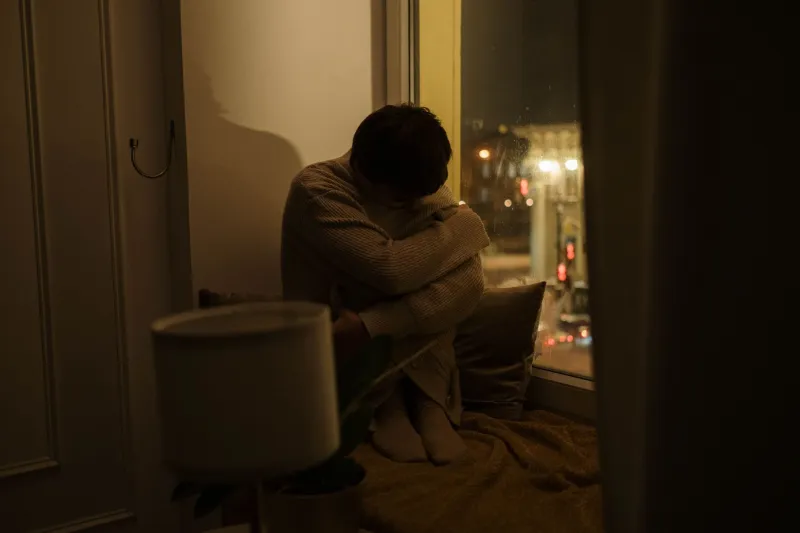
Some Things Were Never Meant to Be Content

Somewhere along the way, the internet convinced us that an unshared experience is basically a wasted one. Post it, caption it, monetize it, or it didn't happen. And honestly? That pressure is relentless. It doesn't matter whether you've got fifty followers or five million — the pull to package your life into something digestible, shareable, and ideally viral is baked into the whole ecosystem now.
But I've been sitting with a question lately that I can't shake: what happens to the parts of yourself you never hand over?
The Economy of Oversharing
The creator economy runs on vulnerability. Not just any vulnerability — the kind that performs. The tearful confession that gets clipped and reposted. The candid moment that drives comments. The personal story that turns into a brand deal two weeks later because it resonated so hard that a wellness company slid into your inbox.
None of that is inherently wrong. I'm not here to shame anyone for making a living off their story. That's real, and it works, and a lot of people have built genuinely meaningful careers doing exactly that.
But there's a sleight of hand happening underneath all of it that doesn't get talked about enough. When everything becomes content, the line between living your life and producing your life starts to blur in ways that are hard to come back from. You start experiencing things through the lens of how they'll land rather than just letting them land on you first.
And that's where things get complicated.
What You Keep Tells You Something
I've noticed something about the moments I've chosen not to share — not because they were too dark or too personal in an obvious way, but just because they felt like mine. Those moments have a different texture. They sit differently in my memory. They didn't get flattened into a caption or trimmed to fit a reel. They stayed whole.
There's something about selective silence that actually sharpens your sense of self. When you're constantly externalizing your experience, you're also constantly getting it reflected back through other people's reactions. The algorithm tells you what resonated. The comments tell you how people interpreted it. And slowly, without really meaning to, you start calibrating what you think and feel based on what got engagement.
Keeping certain things private short-circuits that loop. It forces you to just know what you know, without needing it validated by anyone else's response.
The Myth That Withholding Is Dishonest
One of the weirdest cultural shifts in the last decade is this idea that if you're not sharing everything, you're somehow being fake. Like privacy is a form of deception. Like the most authentic version of you is the one that's fully documented and publicly accessible.
That's just not true, and I think most people know it isn't true — but the pressure to perform authenticity is strong enough that it can feel true anyway.
Here's the thing: curating what you share isn't the same as lying. Every single person on this planet has an interior life that doesn't make it into their public-facing version of themselves. That's not a flaw in the system. That's just being human. The question isn't whether you keep things private — everyone does — it's whether you're intentional about it.
The people I respect most, in this space and outside of it, aren't the ones who've shared the most. They're the ones who seem to have a clear sense of what belongs to them versus what they're putting out into the world. That distinction reads. You can feel it.
Wisdom That Doesn't Scale
Here's the part that really gets me: some of the most genuinely useful things I've learned — about people, about how things actually work, about myself — are things that would be almost impossible to turn into content without losing what makes them valuable.
Not because they're secrets in a dramatic sense. Just because the insight is so tied to the specific context and the specific moment that pulling it out and packaging it into something broadly applicable would kind of hollow it out. The lesson was for me, in that situation, with those particular people involved. Turning it into a post wouldn't make it more useful to anyone. It would just make it less true.
There's a version of wisdom that scales — the kind that translates into frameworks and advice and shareable quotes. And that stuff has real value. But there's another kind that doesn't scale at all, and I think protecting that kind is actually important. It's the part of your understanding that stays nuanced and complicated and resistant to being flattened.
Once you start translating everything into content, you start unconsciously discarding the things that resist translation. And those things are often the most real.
Knowing the Difference
So how do you actually figure out what should stay private and what's worth putting out there? I don't think there's a clean formula, but the filter I keep coming back to is pretty simple: am I sharing this because it's genuinely useful or connective, or am I sharing it because I want something from the response?
That's not a judgment — wanting connection, wanting validation, wanting to feel like your experience matters to someone else, those are all completely human things to want. But being honest with yourself about the motivation changes how you make the call.
Some things I've sat on for months and eventually shared because they turned out to have something real in them for other people. Some things I've sat on for years and they're still sitting, and they're going to keep sitting, and that feels exactly right.
The shelf life of a secret isn't really about how long you can keep it. It's about recognizing when something was never meant to be handed over in the first place.
What's Actually Exclusively Here
This site has always been about giving you access to the real version of things — the creative process, the honest take, the stuff that doesn't get sanitized for a broader platform. That's the whole point. But part of what makes that access mean something is that it's not everything. There's still a version of this that exists outside of what gets published, and that version is what keeps the published stuff honest.
You can only give people something real if you've got something left that you're not giving away. That's the part I'm holding onto.