Selling Real: How 'Being Yourself' Became the Most Expensive Act Online
There's a specific kind of tired that hits when you're sitting in front of a ring light trying to figure out how to make something feel spontaneous. You're not performing, technically. But you're also not exactly just... existing. You're somewhere in between — this weird liminal space where the goal is to look like you didn't try, while absolutely trying.
That's the trap nobody talks about openly. And honestly? It's one of the more exhausting parts of doing anything creative in public right now.
When 'Real' Became a Genre
At some point — and I'd argue it was somewhere around 2018, give or take — audiences started demanding a different flavor of content. The polished stuff started feeling hollow. People wanted messy buns, bad lighting, cracked voices. They wanted to feel like they were watching someone's actual life, not a production.
Which makes sense, right? We were all burned out on the highlight reel. The glossy travel photos, the impossibly curated kitchens, the perpetual glow-up. It felt fake because it was fake, and eventually enough people said so out loud that the whole ecosystem shifted.
But here's where it gets complicated: the moment "authentic" content started performing better — getting more views, more saves, more engagement — it became a format. A template. Something you could reverse-engineer and replicate.
Suddenly, "being real" had a playbook.
The Vulnerability Industrial Complex
Open up any major platform right now and you'll see it within about thirty seconds. Someone crying on camera. Someone sharing a "hard truth" with a perfectly timed pause before the punchline. Someone posting a photo with no makeup and a caption that reads like it was workshopped three times before it went live.
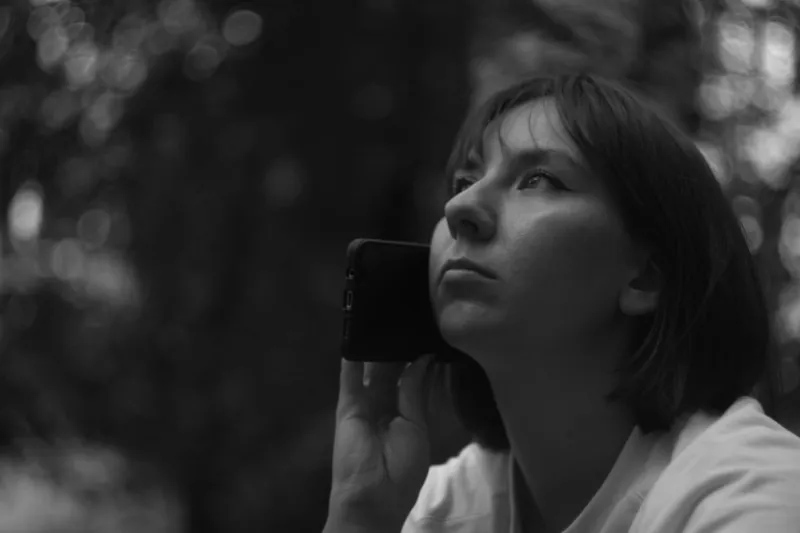
None of that is necessarily dishonest. People do cry. Hard truths are real. Some of the most moving content I've ever seen online came from someone just sitting in their car talking to their phone.
But there's a difference between a moment that happens to be captured and a moment that's constructed to feel like it happened. And the audience — bless them — can usually tell. They just don't always call it out, because the performance is good enough to let them suspend disbelief.
The creator economy has essentially built a market around emotional realness. Brands want to partner with people who feel "genuine." Algorithms reward content that drives emotional responses. And so the incentive structure quietly pushes everyone toward performing authenticity, even when they started out just trying to be themselves.
It's a strange loop. And once you're in it, it's genuinely hard to find your footing.
What Gets Lost in the Broadcast
Here's something I think about a lot: the moments that actually matter to me — the ones that shift something internally, that feel true and unguarded — almost never make it into content. Not because I'm hiding them, but because the second I think about sharing something, it changes. The observation becomes a post. The feeling becomes a caption. The experience becomes material.
And I don't think that's unique to me.
There's a version of your life that exists only in your own head, in conversations with people you trust, in the quiet after something significant happens. That version doesn't have an audience. It doesn't need a hook. It's just yours.
The more time you spend in public-facing creative work, the more precious that private version becomes. Because everything else is, to some degree, a product. Even the raw stuff. Even the things that feel most "you."
The New Performance Anxiety
What nobody warned creators about — especially those of us who came up genuinely wanting to connect — is that the pressure to be authentic creates its own breed of anxiety. It's different from the old pressure to be perfect. That one at least had a clear standard. You either hit the aesthetic or you didn't.
This new pressure is murkier. Am I being real enough? Is this too polished? Does this come across as genuine or does it look like I'm trying to look genuine? It's recursive in a way that can make you second-guess everything, including the things that actually are real.
I've talked to enough people doing creative work online to know this isn't just me overthinking it. There's a collective low-grade anxiety around authenticity right now that feels almost ironic — we're all stressed about not seeming stressed, all performing ease, all packaging our imperfections with just enough intentionality to make them land.
Finding the Line (If There Even Is One)
I don't think the answer is to stop sharing. And I don't think every creator who leans into vulnerability is being manipulative. Most people are genuinely trying to connect, and connection requires some degree of openness.
But I do think it's worth being honest — with yourself first — about the difference between sharing something because it matters and sharing something because you know it'll perform. Those motivations aren't always mutually exclusive, but they're also not the same thing, and conflating them is where the exhaustion really sets in.
For me, the most grounding thing has been getting comfortable with the idea that not everything needs to be content. Some things can just be life. Some conversations can stay in the room. Some feelings can exist without being turned into a caption or a clip or a lesson wrapped in a trending audio.
That's not withholding. That's just keeping something for yourself.
The Realest Thing I Can Say
Authenticity, at its best, isn't a strategy. It's what's left when you stop trying to manage how you're perceived. And ironically, the more you chase it as a product, the further it gets.
The most genuine moments I've had — the ones I'd actually call real — happened when nobody was watching. When the camera was off, the story wasn't up, and I wasn't thinking about how any of it would land.
That's the version of "real" that doesn't translate into content. And maybe that's exactly what makes it worth protecting.